
1. Can you briefly introduce your team? What’s your story and what drives you?
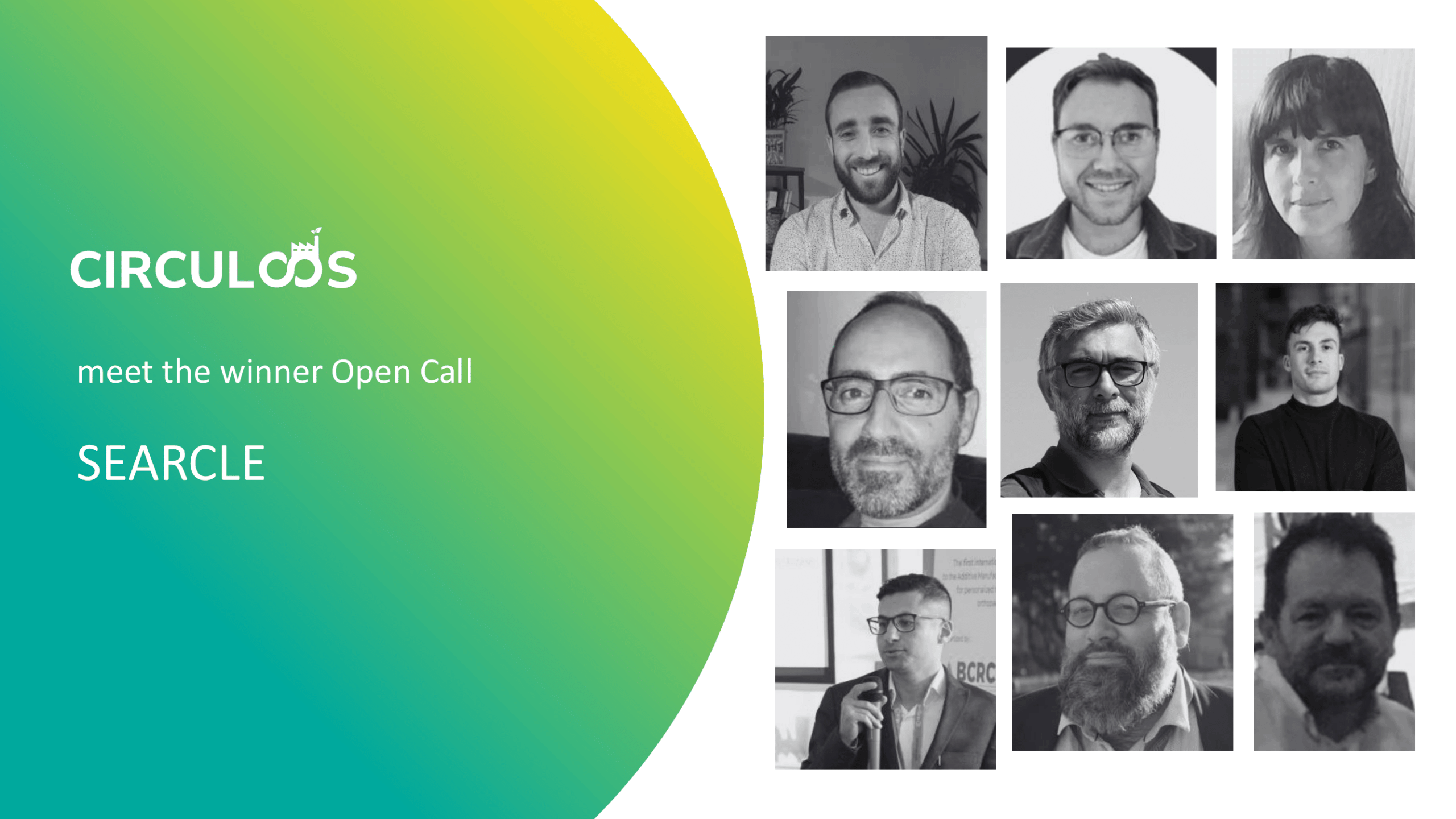
We’re an interdisciplinary team that mixes hands-on industrial experience with solid research backgrounds. What motivates us is developing solutions that are practical, affordable, and actually useful for industry not ideas that stay stuck in a lab. We enjoy working with new technologies and materials to tackle real industrial and environmental problems.
Each partner brings something essential to the project:
- LTI contributes expertise in new technologies, including mechatronics, materials, and additive manufacturing.
- CIRIMAT focuses on ceramic formulation and material testing, helping us design and understand the core material.
- Concr3de is our industrial 3D-printer partner, providing binder-jetting technology for printing large ceramic parts.
Together, we cover everything from material design to practical industrial implementation, which helps us move quickly and stay grounded in real-world needs.
2. In simple words, what is your project about and how is it linked with CIRCULOOS?
In the production of composite parts, manufacturers currently rely on molten salt as a dissolvable mold. This process requires heating the salt with gas, resulting in a high CO₂ footprint, and it limits the geometry of parts that can be produced. Moreover, each mold is used only once and then discarded.
Our project aims to transform this entire process while keeping industrial costs under control. We propose replacing molten salt molds with 3D-printed, dissolvable ceramic cores. After use, the ceramic can be washed out, the resulting powder recovered, and reintroduced into a new 3D-printing batch. Because the ceramic powder can come from existing waste streams such as seashells, alumina, or glass shards the process becomes both circular and economically advantageous. This aligns perfectly with the CIRCULOOS vision of low-carbon, resource-efficient materials.
3. How did you come up with this project idea/concept and what innovative benefits will it bring to the end users?
The idea emerged through collaboration between our research laboratories and industrial partners developing commercial 3D printers. Working closely together allowed us to identify a real industrial need and design a practical, result-oriented solution.
For end users, the project offers several innovations:
- Greater geometric freedom compared to molten salt molds.
- A drastic reduction in CO₂ emissions by eliminating gas-heated salts.
- A circular system in which cores are recycled rather than discarded.
- Cost-neutral or cost-efficient implementation compatible with existing industrial constraints.
4. What type of synergies do you want to explore/are already exploring with other circular economy partners?
We are already exploring synergies through another project focused on recycling metal powders from industrial metal waste using similar 3D-printing technologies. We strongly believe that additive manufacturing can become a key driver of the circular economy, enabling the reuse of valuable materials and reducing waste across multiple sectors.
5. What are your plans for the future when it comes to the development of your ideas & projects?
Our goal is to scale up these technologies and move from proof-of-concept to industrial deployment. We plan to expand our material portfolio, strengthen partnerships across the circular-economy ecosystem, and validate our solutions in real industrial environments.