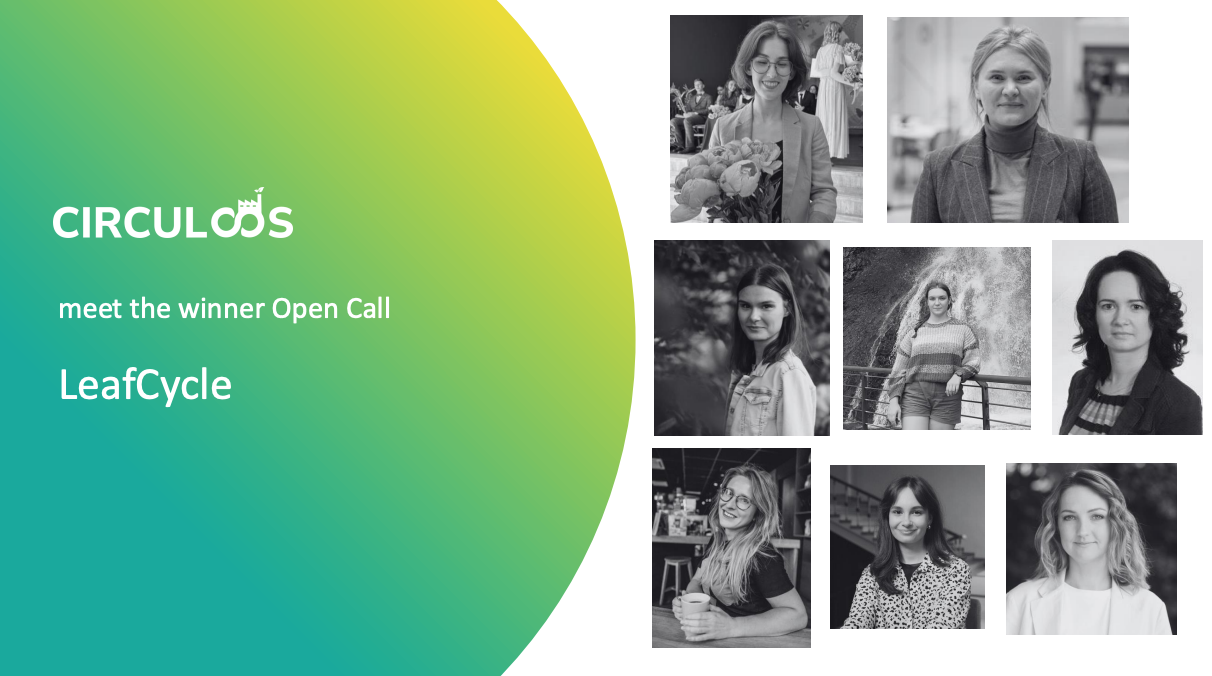
1. Can you briefly introduce your team? What’s your story and what drives you?
LeafCycle is a Latvian–Estonian consortium led by Fat Cat Leaves, a startup developing biodegradable cat litter from fallen leaves. The team includes Rīgas Meži, Riga’s municipal company managing city parks and collecting leaves; Riga Technical University, providing R&D and environmental analysis; and Cleantech for Baltics, a pan-Baltic cleantech think-tank. The story began when Fat Cat Leaves created its first prototypes of cat litter from fallen leaves and discovered during a sustainability hackathon that Rīgas Meži was also searching for new, more sustainable ways to manage seasonal leaf waste.
This shared challenge became the foundation for collaboration. What drives the team is a simple idea — turning something common and often ignored, like autumn leaves, into a useful, eco-friendly product. The partners share the belief that circular innovation can be practical, local, and impactful, showing that even small ideas can lead to real environmental change.
2. In simple words, what is your project about and how is it linked with CIRCULOOS?
LeafCycle turns fallen leaves into compostable cat litter by connecting municipalities that collect leaves, research partners who improve material properties, and companies that develop and distribute the product. It directly supports CIRCULOOS objectives by showcasing a real, scalable example of how urban green waste can become a new raw material. The project reduces municipal waste management costs, lowers CO₂ emissions from leaf disposal, and offers consumers a sustainable alternative to traditional clay-based litters that are non-biodegradable.
3. How did you come up with this project idea/concept and what innovative benefits will it bring to the end users?
The idea started when Fat Cat Leaves began exploring ways to turn fallen leaves into something useful instead of sending them to composting or landfill. At the same time, Rīgas Meži was also searching for new and more efficient ways to manage seasonal leaf waste. This shared goal led to the collaboration that became LeafCycle. For end users, the innovation lies in sustainability and performance.
The product aims to combine strong odour absorption with improved clumping, while remaining fully compostable after use. Unlike most biodegradable cat litter made from specially grown crops, LeafCycle uses freely available natural waste — reducing resource use and keeping both cats and the planet cleaner.
4. What type of synergies do you want to explore/are already exploring with other circular economy partners?
LeafCycle is already working with municipal waste managers, technology experts, and academic partners interested in reusing organic materials. We plan to expand these synergies by partnering with regional circular economy hubs and eco-packaging producers to close the loop further. We also aim to collaborate with pet product distributors and sustainable retailers to bring the cat litter to consumers across new markets, creating a fully circular chain — from leaf collection to product packaging and use.
5. What are your plans for the future when it comes to the development of your ideas & projects?
After the LeafCycle project, Fat Cat Leaves aims to bring the improved cat litter to market and expand production locally in Latvia and neighbouring regions. The long-term goal is to create a decentralised network of small producers across Europe, each using locally collected leaves to make the same sustainable product. The company will keep working with research institutions and municipalities to further develop its technology, making the process more efficient and environmentally friendly. The vision is straightforward — to show that even seasonal waste like fallen leaves can be turned into a valuable, profitable, and truly circular product that benefits both cities and pet owners.