What happens when European SMEs get funding, digital tools and support to turn overlooked waste streams into circular value chains? The impact assessment of the CIRCULOOS Open Call 2 and Open Call 3.1 cohorts gives a clear answer.
Through cascade funding, CIRCULOOS supported 18 experiments: 15 demonstrators under Open Call 2, each forming a new circular consortium around a specific waste or by-product stream, and 3 projects under Open Call 3.1 that extended the project’s core Plastic and Leather pilot lines. Every funded team completed the impact assessment, so we combined all the results below to describe the outcomes of the full cohort. All figures presented are as reported by the teams themselves.
From discarded streams to new value chains
The range of materials is broad: plastic waste, expanded polystyrene, spent coffee grounds, olive pits, brewers’ spent yeast, granite sludge, recycled concrete, seashells, fallen leaves, felt and leather waste, toys, machine tools, microswitches and used laptops. For several of these streams, such as granite sludge, fallen leaves and seashells, there was no established recovery route, the experiments were the first structured attempt to create one.
Despite this diversity, the results are consistent. Seventeen of the eighteen teams report material reused, recycled or valorised and 16 report reduced or avoided CO₂e emissions. Fourteen developed a new circular product or service. In Open Call 2, 11 of the 15 demonstrators took their circular material stream at least as far as integration in a demonstrator and four reached operational use.
The results are grounded in evidence. Nine of the fiveteen Open Call 2 teams back at least one reported KPI with a measured value rather than a target or an assumption, a strong outcome for experiments of this length. The benefits were economic as well as environmental: 47% of Open Call 2 teams report cost savings and 40% report new revenue.
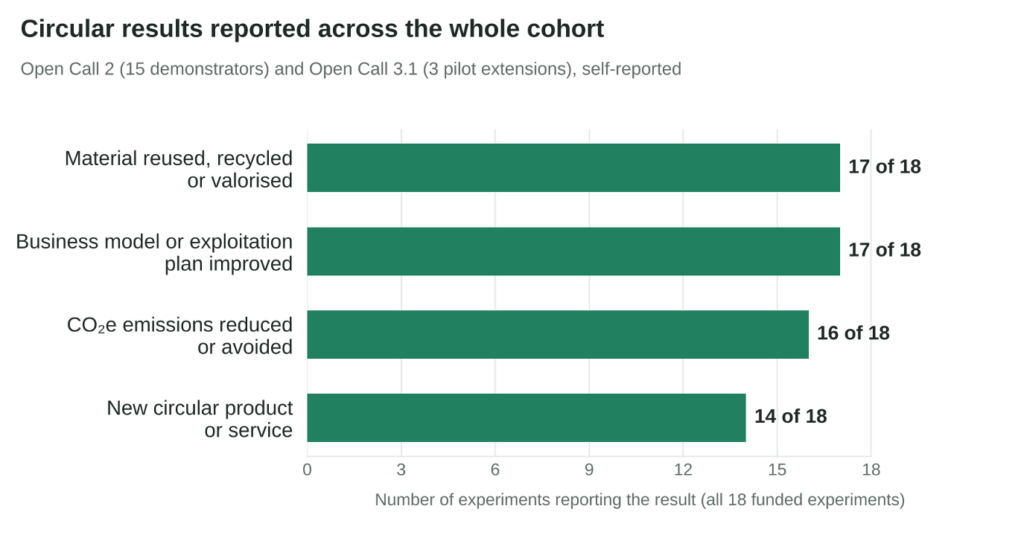
Figure 1. Circular results reported by the 18 experiments funded under Open Call 2 and Open Call 3.1.
CIRCULOOS tools in real-world use
The cohorts put the CIRCULOOS toolchain to work. All fiveteen Open Call 2 teams used the GRETA life cycle assessment tool, fourteen used the CIRCULOOS data platform and twelve used the RAMP marketplace. Eleven used all three, with no obligation to adopt the full toolchain.
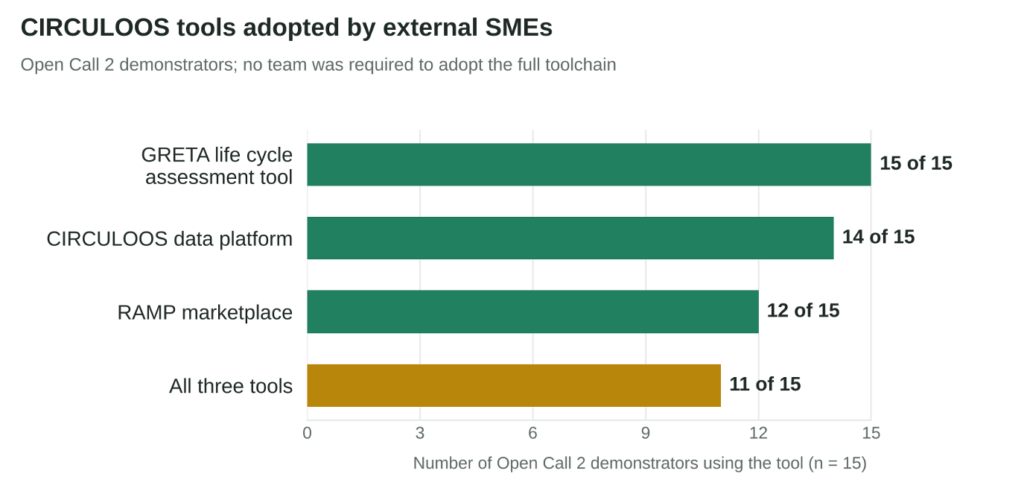
Figure 2. Uptake of CIRCULOOS tools by the 15 Open Call 2 demonstrators.
The Open Call 3.1 teams, working on established pilot lines, went further still. Each used between five and seven CIRCULOOS tools and all three used GRETA, the data platform, RAMP and the Supply Chain Digital Twin. All three also report improved traceability.
People, partnerships and stronger business cases
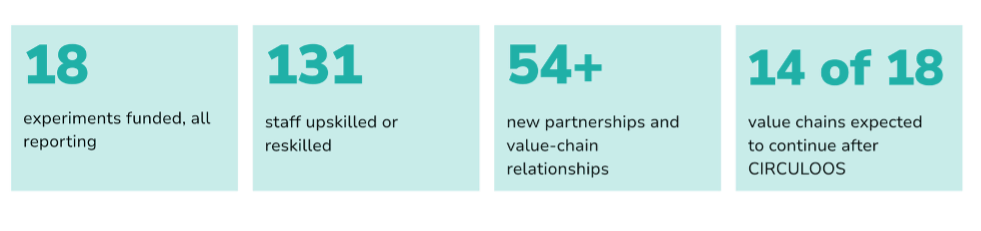
Across the two cohorts, 131 staff were upskilled or reskilled and the teams created at least 54 new partnerships and value-chain relationships. Seventeen of the eighteen teams report an improved business model or exploitation plan, most often a new or sharper value proposition.
The chains are built to last: 14 of the 18 teams expect their extended value chain to continue after CIRCULOOS and seven Open Call 2 teams already report an identified commercial pathway.
Moving CIRCULOOS towards its targets
These results already bring CIRCULOOS close to, or beyond, several of its project-level targets. Together, the two cohorts account for 18 of the project’s 19 target circular supply chains, 15 newly formed and 3 extended. The 131 professionals trained exceed the target of 80 by 64%, with one open call still to report. And the experiments span nine industrial domains against a target of six, from construction and agri-food to electronics, automotive and textiles and leather.
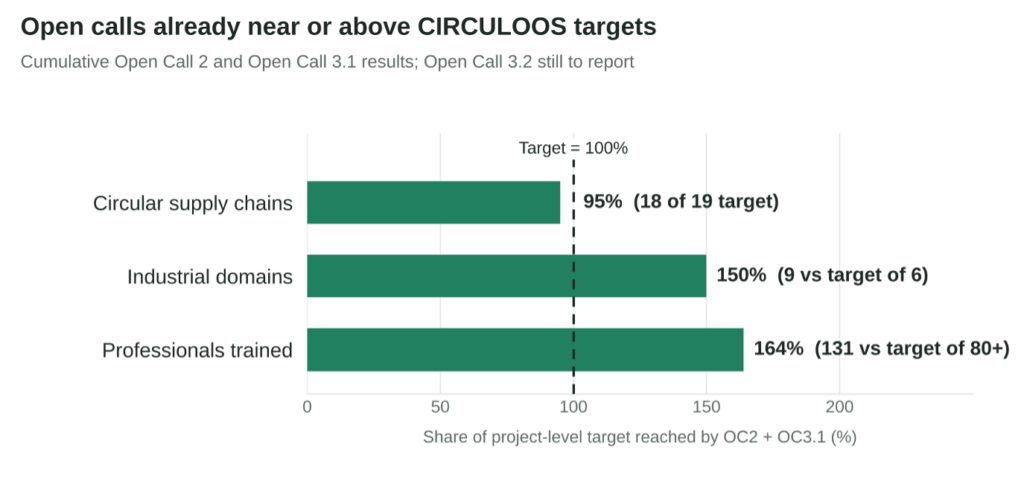
Figure 3. Cumulative Open Call 2 and Open Call 3.1 results as a share of CIRCULOOS project-level targets. Open Call 3.2 is not yet included.
Culminating in Barcelona
The two cohorts came together in Barcelona on 30 September 2026, at a full-day CIRCULOOS workshop held alongside the project’s 4th Plenary Meeting. Teams delivered their final pitches to a jury of project partners and experts, who assessed them on innovation, circularity and business potential. RECONCRETE, which produces urban furniture from recycled concrete incorporating recycled slag and construction-demolition waste, was recognised as the top experiment of the day.
Read the full event report: From Circular Solutions to Industrial Scale.
With Open Call 3.2 now under way, a third cohort is building on these results, and its outcomes will complete the picture of what cascade funding can do for circular manufacturing in Europe.